Planetarium is now OPEN with new shows and advanced 3D immersive visual experience
About the Planetarium
The Nehru Planetarium in New Delhi is situated in the green surroundings of the Teen Murti House, earlier the official residence of India's first Prime Minister, Jawaharlal Nehru and now a museum in his memory. Conscious of the fact that an understanding of the spirit and method of science was crucial for children to become responsible citizens, Nehru liked every opportunity to be provided to them in this endeavor. In 1964, the Jawaharlal Nehru Memorial Fund was set up to promote his ideas and subsequently it undertook to build the Nehru Planetarium with its primary aim being the promotion of astronomy education. Nehru Planetarium is now a wing of the Nehru Memorial Museum and Library.
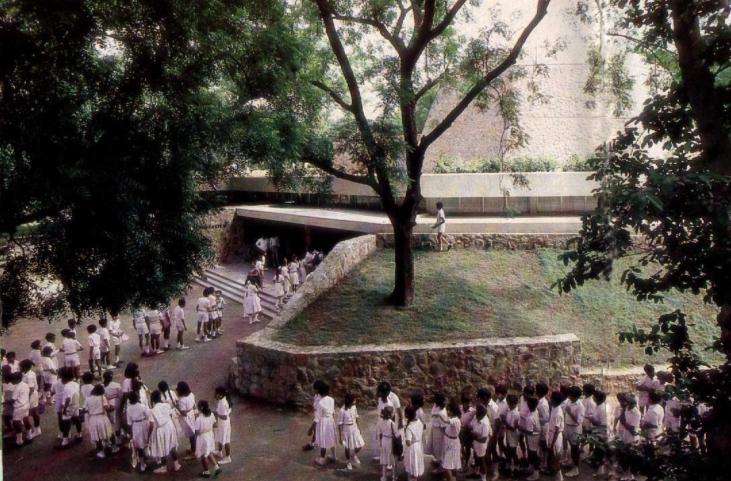
The Planetarium has been constantly improvising and innovating programmes for its visitors. The strength of the planetarium lies in its live interactions and programs for visitors, students and amateur astronomers. The Planetarium is always active with programs for school and college students and for amateur astronomers. Through out the year, there are a number of workshops or observing activities. There are also Astronomy Quiz and Art competitions in the months of February and August.
The planetarium infrastructure and projection equipment has very recently been upgraded with the upgradation process being undertaken as a turn key project by the National Council of Science Museums, Kolkata.
The regular programmes of the Planetarium include public shows at 11:30 AM (English), 1:30 PM (Hindi), 3:00 PM (English) and 4:00 PM (Hindi). The topics included in these programmes are continuously updated. At present, the program on Solar System is being run at the Planetarium. Other programs include Digital 2D programs on Asteroids, Astronauts, Light Pollution etc.
'''Summer online lectures in Astronomy''' Recorded Lecture
Some activities in the recent past
Annular Solar Eclipse of the 21st of June 2020
Annular Solar Eclipse of December 26 2019
Towards the Great Conjunction of Jupiter and Saturn December 2020
Register for Skywatch at the Planetarium for the Jupiter/Saturn conjunction